
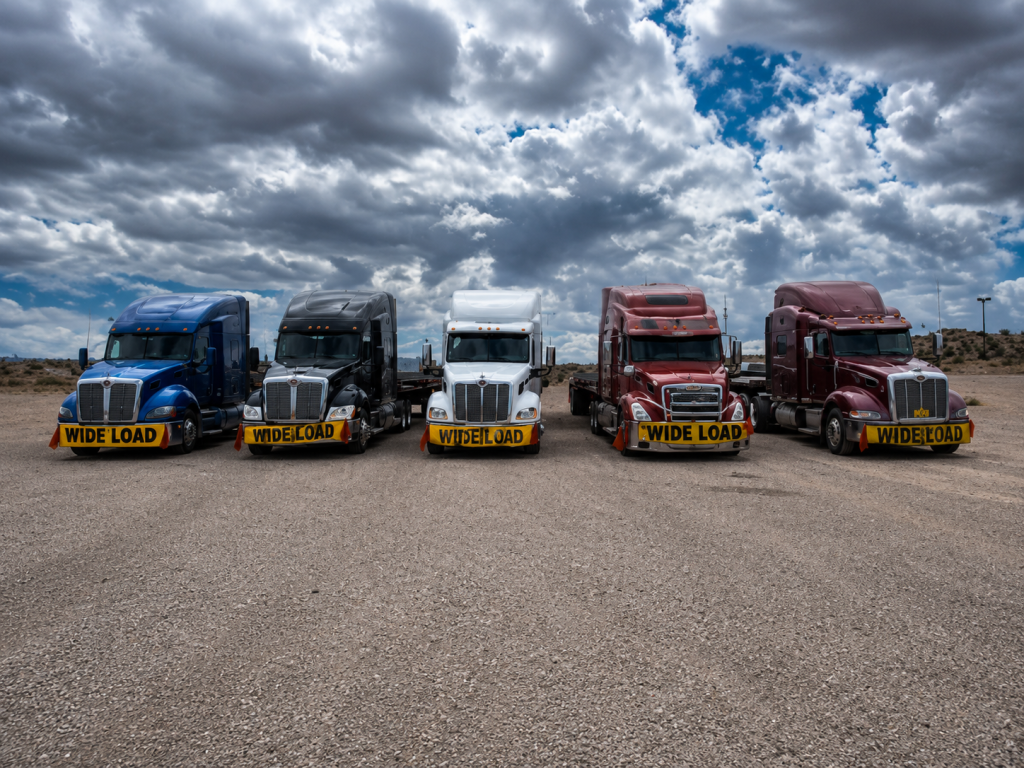
IF THE TRUCK WILL NOT GO INTO GEAR OR STARTS SHIFTING WRONG, START WITH WHAT TRANSMISSION IT HAS, WHAT THE DISPLAY OR SHIFTER IS DOING, AND WHETHER THE PROBLEM HAPPENS FROM A STOP OR WHILE THE TRUCK IS MOVING.
A shifting problem does not automatically mean the transmission itself has failed.
A truck may refuse a gear because the clutch is not releasing, a service-brake signal is missing, transmission air pressure is too low, a shift interlock is active, the range or splitter system is not moving, an actuator or sensor has failed, or the transmission controller has detected a condition that makes the requested shift unsafe.
The first important distinction is what kind of transmission is in the truck.
A traditional Eaton Fuller manual relies on the driver, clutch, clutch brake, shift linkage and pneumatic range/splitter system. An automated manual transmission such as Eaton Cummins Endurant, Detroit DT12 or PACCAR TX-12 still uses mechanical gearing and a clutch, but computers and actuators perform the clutching and shifting. A true automatic such as many Allison transmissions uses a torque converter and hydraulic/electronic controls rather than a conventional dry launch clutch.
That difference changes where you start looking.
Start with the transmission type, whether the truck is stopped or moving, what gear is requested, what gear the display says is actually engaged, whether the service brake is applied, air pressure, fault messages and what changed immediately before the problem started.
START HERE: WHAT HAPPENS WHEN YOU TRY TO SHIFT?
| WHAT YOU NOTICE | WHAT IT CAN POINT TOWARD |
|---|---|
| An automated transmission is in Neutral, you select Drive or Reverse, but it stays in N | Start with the required operating conditions before assuming an internal failure. The service-brake signal, transmission/chassis air pressure, neutral/hold-neutral inputs and active transmission faults can all affect engagement. Eaton Cummins specifically directs diagnosis toward the brake-switch function when an Endurant is commanded into gear but remains in N. |
| The automated transmission will not go into gear until air pressure builds | Transmission air supply matters on many heavy-duty AMTs. Endurant and DT12 use pneumatic functions as part of shifting; insufficient air can prevent or degrade gear engagement. The exact required pressure depends on the transmission and chassis, so use the actual system specification rather than one universal number. |
| You select Drive or Reverse without pressing the service brake and nothing happens | That can be normal interlock behavior rather than a failed transmission. Eaton Cummins and PACCAR both document AMT configurations that require the service brake to be applied before selecting a non-neutral mode. |
| The display shows F, SERVICE TRANSMISSION or another transmission warning | Save the exact display, fault code and conditions before cycling power or clearing anything. Eaton’s Endurant diagnostic procedure specifically directs technicians to retrieve fault codes when an F appears during gear selection or engagement. |
| The AMT goes into Auto-Neutral and will not move when Drive is still selected | Some systems intentionally place the transmission in Neutral under defined conditions. Detroit’s DT12 Auto-Neutral logic requires the driver to select N and then reselect D before moving again. Other AMTs may use similar but not identical strategies. |
| A manual transmission grinds when going into the starting gear or Reverse while stopped | Move the clutch brake and clutch-release system higher on the list. Eaton states that the clutch brake stops the clutch discs and transmission input gearing specifically to prevent grinding during initial gear engagement while stationary. |
| A manual transmission goes into gear with the engine off but fights or grinds with the engine running | That strongly suggests the input side may still be turning. Move clutch release, clutch adjustment/actuation and clutch-brake operation higher on the list before condemning the gearbox itself. |
| A manual transmission is hard to shift in several gears | Do not automatically assume damaged internal gears. Eaton’s current Fuller troubleshooting information specifically tells technicians to inspect shift linkage, worn bushings/connections, binding, adjustment and lubrication before deciding the transmission itself is causing hard shifting. |
| The main gears shift but the range selector will not change from low to high, or shifts very slowly | Move the range-shift air system higher on the list. Eaton’s Fuller service manual identifies the air filter/regulator, control/slave valve, range cylinder, air lines and related shift-bar components as possible causes when the range section will not shift normally. |
| The splitter will not change or only one split works | Look toward the splitter air/control system and auxiliary-section components rather than assuming the main box is bad. Air pressure, solenoids/valves, cylinders and mechanical engagement can all be involved depending on transmission type. |
| The transmission goes into gear but jumps or slips back out | That is different from hard shifting. Eaton identifies incomplete engagement, worn/tapered clutching teeth, auxiliary-section problems, driveline vibration and low air pressure among conditions that can contribute to slipout/jumpout on applicable Fuller transmissions. |
| An AMT refuses a manual upshift or downshift while driving | A denied shift is not automatically a fault. Modern AMTs can reject a shift if vehicle speed, engine speed, load or other operating conditions would make the requested gear inappropriate. Eaton Cummins and Detroit both document this protective behavior. |
| A full automatic selects a range but does not actually engage it | Electronic automatic transmissions can use shift-inhibit logic when operating conditions are not acceptable. Save the selector display and diagnostic information rather than repeatedly moving the selector between ranges. Allison’s current operator manuals and diagnostic resources are available through Allison HUB. |
| The problem started immediately after clutch, transmission, battery, wiring or air-system work | Go back to what changed. AMTs can require correct power, grounds, air supply, brake inputs and calibrations after certain repairs. Endurant, for example, requires clutch/rail calibration under specific service conditions. |
| Shifting problems appear along with a transmission-fluid leak, noise or overheating | Add lubricant level/condition and internal transmission condition to the diagnostic picture. Use the level-check procedure and lubricant specification for the exact transmission rather than adding a generic gear oil. |
“WON’T GO INTO GEAR” IS NOT ONE FAILURE.
A manual that grinds into first, an AMT that remains in N, and an automatic displaying a shift inhibit are three different diagnostic paths.
First determine what the transmission is being asked to do — and what is preventing it from doing it.
COMMON SOURCES OF SHIFTING / WON’T GO INTO GEAR PROBLEMS
Do not start by assuming the gearbox needs to come out. Begin with the section that best matches the transmission type and exactly what happens when the shift is requested.
DO NOT FORCE THE TRUCK INTO GEAR OR WORK UNDER IT WHILE TRYING TO MAKE IT ENGAGE
A transmission that is refusing to engage can engage suddenly once the condition preventing the shift changes.
Secure the truck before testing:
- parking brake applied as appropriate,
- wheels chocked when required,
- service brake applied when the procedure calls for it,
- transmission in Neutral before working around the driveline,
- and follow the transmission manufacturer’s diagnostic procedure.
Eaton’s current Fuller service manual specifically warns never to work beneath the vehicle with the engine running because sudden unintended movement can cause serious injury.
Do not defeat a brake switch, neutral interlock, hold-neutral circuit or other safety input simply to make an automated transmission engage.
And do not keep forcing a manual shifter against grinding gears. That can turn a clutch-release or clutch-brake problem into damaged clutching teeth.
Find out why the gear is being refused before forcing the shift.
AUTOMATED TRANSMISSION / SERVICE BRAKE / AIR / SHIFT INTERLOCKS +
WHY THE TRANSMISSION MAY REFUSE TO ENGAGE
An automated manual transmission does not respond only to the position of the shifter.
The transmission controller may need valid information from several vehicle systems before it will engage a gear, including:
- service-brake input,
- transmission state,
- air pressure,
- engine information,
- vehicle speed,
- neutral or hold-neutral inputs,
- and other OEM-configured interlocks.
Eaton Cummins’ Endurant diagnostic procedure specifically checks the service-brake switch when a transmission is requested into gear but remains in Neutral. PACCAR’s TX-12 operator manual similarly states that selecting a non-neutral mode without applying the service brake will not result in gear engagement.
WHAT YOU CAN CHECK
Before assuming the AMT has failed, record:
- what the gear display shows,
- whether D or R was requested,
- whether the service brake is applied,
- chassis air pressure,
- any transmission warning,
- whether a fault code is active,
- and whether Neutral can still be selected normally.
If the truck has just been started after sitting with low air pressure, allow the air system to reach its normal operating range.
If a Hold Neutral / Force Neutral feature is equipped, make sure a PTO, body or vocational control is not intentionally commanding the transmission to remain in Neutral. Eaton’s current Endurant logic can use an HN display when such a feature is active.
WHY THIS CAN PREVENT GEAR ENGAGEMENT
A manual transmission needs the clutch to separate the engine from the transmission sufficiently for a shift to occur.
When the truck is stationary, many heavy-duty manuals also use a clutch brake to stop the input gearing so the driver can engage the initial starting gear without grinding.
Eaton states that the clutch brake is intended specifically for initial gear engagement while the vehicle is standing still. It should not be used during normal moving upshifts or downshifts.
WHAT YOU CAN CHECK
Notice exactly how the symptom behaves.
Ask:
- Does first or Reverse grind only while stopped?
- Does the transmission go into gear normally with the engine shut off?
- Does the truck try to creep with the clutch pedal fully depressed?
- Has clutch pedal feel or release point changed?
- Was the clutch or release system recently serviced?
- Is there a hydraulic or mechanical release-system problem?
- Does fully depressing the pedal make the starting gear easier to engage?
Do not repeatedly grind the gears to test the condition.
WHAT THE CLUES MEAN
If the transmission shifts normally once moving but repeatedly grinds going from Neutral into the starting gear while stationary, the clutch brake deserves attention.
If it fights several gears and the transmission input continues to be driven even with the clutch pedal depressed, look beyond the clutch brake toward clutch release or clutch drag.
The clutch brake stops input rotation at a standstill; it does not correct a clutch that is failing to release properly.
WHERE THE BASIC CHECK ENDS
Clutch adjustment, release-bearing travel, clutch-brake condition and hydraulic/mechanical actuation must be checked to the clutch manufacturer’s procedure.
Do not compensate for poor clutch release by forcing the shift lever harder.
WHY THIS CAN CREATE A SHIFTING PROBLEM
A heavy-duty manual transmission is more than the gears inside the main case.
Depending on the model, shifting may also involve:
- the shift lever or remote linkage,
- shift rails/yokes,
- range selection,
- splitter selection,
- pneumatic valves,
- an air regulator,
- range or splitter cylinders,
- and the auxiliary transmission section.
Eaton’s Fuller troubleshooting guide specifically says that binding, worn linkage, bushings, poor adjustment and lack of lubrication can create hard-shifting complaints before the internal transmission is ever opened.
WHAT YOU CAN CHECK
If the shift lever itself is stiff, identify whether the complaint affects:
- every gear,
- only one shift gate,
- only the high/low range transition,
- or only the splitter.
Listen for unusual air leakage around the shift control.
Make sure the truck has normal air pressure.
If the range or splitter problem appeared immediately after transmission, air-system or shift-control work, inspect what was disturbed.
WHAT THE CLUES MEAN
If the main-box lever shifts normally but the transmission refuses to move from low range to high range, the range system becomes more interesting than the main gears.
If only the splitter stops responding, narrow the investigation further.
Eaton’s Fuller service manual identifies the range system’s filter/regulator, valves, air lines and range cylinder as separate components that can cause a failed or slow range shift.
WHERE THE BASIC CHECK ENDS
Air-system pressure testing and range/splitter mechanical diagnosis should follow the service manual for the exact transmission model.
Do not randomly swap air lines or change regulator settings trying to make the auxiliary section move.
WHY ELECTRONIC PROBLEMS CAN LOOK MECHANICAL
An automated transmission depends on electronic commands to operate mechanical components.
The controller needs to know things such as:
- engine speed,
- transmission input/output speed,
- service-brake status,
- shift-selector request,
- clutch position,
- rail/gear position,
- and information exchanged over the vehicle data link.
It then commands the clutch actuator and transmission shift mechanism.
A wiring, sensor, actuator, communication or calibration problem can therefore leave a mechanically intact transmission sitting in Neutral.
Eaton’s current Endurant troubleshooting process separates vehicle-interface, component, system and feature fault codes and prioritizes active faults before deeper symptom-based diagnosis.
WHAT YOU CAN CHECK
Before clearing anything, save:
- exact transmission warning,
- gear-display indication,
- complete fault code,
- FMI where provided,
- active versus inactive status,
- occurrence count or timestamp if available,
- and what the truck was doing when the problem appeared.
Inspect obvious wiring or connector problems, especially after:
- transmission work,
- clutch work,
- battery replacement,
- starter work,
- chassis wiring repairs,
- or pressure washing/road contamination around transmission connectors.
WHAT THE CLUES MEAN
A fault mentioning a clutch actuator, rail, brake input or speed sensor does not automatically prove that component needs replacement.
The diagnostic path may include:
- circuit voltage,
- wiring integrity,
- power and ground,
- data-link communication,
- calibration,
- mechanical resistance,
- or actual component failure.
A display that works but repeatedly shows the wrong state is a different clue from a transmission that has lost power or communication entirely.
WHERE THE BASIC CHECK ENDS
Use the manufacturer diagnostic tool and fault tree.
For Endurant that means the current ServiceRanger/Endurant troubleshooting information. Detroit DT12 diagnosis uses the DTNA diagnostic environment, and Allison uses Allison DOC/HUB resources for electronically controlled automatics.
WHY THIS CAN CAUSE SHIFTING PROBLEMS
Once the controls, clutch and external shift systems have been ruled out, the transmission itself still has mechanical components that can fail or wear.
Possible internal problems can involve:
- shift rails or yokes,
- synchronizing or clutching components where used,
- sliding clutch gears,
- bearings,
- shafts,
- gear teeth,
- and auxiliary-section components.
Lubrication also matters. Heavy-duty transmissions require the correct lubricant at the correct level. Eaton publishes specific lubricant requirements rather than recommending generic differential gear oil for its manual and automated transmissions.
WHAT YOU CAN CHECK
Look for external clues before opening the transmission:
- lubricant leakage,
- known low-fluid condition,
- new growling or bearing noise,
- grinding,
- metal found during service,
- overheating,
- gear jumpout,
- or a problem isolated to one specific gear.
Check fluid level using the actual transmission procedure.
Also record whether the condition started after a lubricant change and exactly what product was installed.
WHAT THE CLUES MEAN
Hard shifting in every gear does not automatically mean internal gear damage.
But a transmission that:
- repeatedly jumps out of the same gear,
- makes new internal noise,
- contains metal debris,
- or cannot mechanically remain engaged
deserves a different level of inspection.
Eaton identifies worn/tapered clutching teeth and incomplete auxiliary-section engagement among causes of transmission slipout on applicable Fuller transmissions.
WHERE THE BASIC CHECK ENDS
Internal transmission diagnosis is where the basic driver-level checks end.
Do not keep forcing or road-testing a transmission that is grinding heavily, jumping out of gear or making new internal mechanical noise simply to duplicate the complaint again.
FIRST IDENTIFY WHAT KIND OF TRANSMISSION IS IN THE TRUCK
“Automatic,” “automated” and “manual” are not interchangeable. Knowing which system you have prevents you from chasing parts that are not even on that transmission.
TRADITIONAL MANUAL
A traditional heavy-duty manual such as an Eaton Fuller generally uses:
- a driver-operated clutch pedal,
- manual shift lever,
- clutch brake,
- and, on multispeed models, pneumatic range and/or splitter controls.
The driver physically controls gear engagement and clutch release.
If it will not go into gear, clutch release, clutch brake, linkage and range/splitter operation are major early clues.
AUTOMATED MANUAL — AMT
An automated manual still has mechanical gears and a clutch, but actuators and the transmission controller operate them.
Examples include:
- Eaton Cummins Endurant,
- Detroit DT12,
- PACCAR TX-12,
- and older UltraShift PLUS systems.
Detroit specifically describes the DT12 as having computer-controlled shifting and clutch actuation with no clutch pedal required during normal driving.
The PACCAR TX-12 likewise uses an automated transmission controller and can refuse a requested shift when operating conditions are not appropriate.
If an AMT stays in Neutral, the starting point includes brake inputs, air supply, electrical power, TCM faults, actuators and calibration as well as the mechanical transmission.
FULL AUTOMATIC
A full automatic such as an Allison 3000/4000-series transmission operates differently.
Allison’s current 3000 Series uses a torque converter rather than a conventional dry clutch, and the transmission controller manages hydraulic range and gear changes.
If it refuses Drive or Reverse, think in terms of:
- shift-selector input,
- shift inhibits,
- fault codes,
- fluid condition/level,
- sensors,
- electronic controls,
- and internal hydraulic/mechanical operation.
Do not diagnose it using manual-transmission clutch-brake logic.
THE PRACTICAL RULE
Before searching:
“Why won’t my semi go into gear?”
identify the transmission by manufacturer and model number.
That one piece of information can completely change the troubleshooting path.
DO NOT AUTOMATICALLY BLAME THE TRANSMISSION
A truck refusing to move does not automatically need a transmission.
The problem may be outside the gearbox:
- clutch or clutch brake,
- service-brake switch,
- low air pressure,
- range/splitter air control,
- shift linkage,
- TCM power or ground,
- wiring or data-link communication,
- clutch/shift actuator,
- calibration,
- hold-neutral input,
- or incorrect operating conditions.
Eaton Cummins’ own diagnostic process checks vehicle-interface inputs and external systems before automatically treating a no-engagement complaint as an internal gearbox failure.
Find out what is preventing the shift before replacing the transmission.
BEFORE YOU START REPLACING PARTS,
SAVE THE CLUES FIRST.
Before changing anything, record:
- Truck: make, model, year and mileage
- Transmission: manufacturer and exact model if known
- Transmission type: manual, automated manual or full automatic
- Shifter: lever, stalk, pushbutton or other selector
- Problem: will not enter gear, hard shift, grinding, shift denied, jumps out, wrong gear or intermittent
- Requested gear: Drive, Reverse, starting gear, range or splitter
- Actual display: N, gear number, F, HN, flashing gear or other message
- Vehicle: stopped or moving when the problem occurs
- Engine: running or off
- Service brake: applied or released
- Parking brake: applied or released
- Air pressure: normal operating range or still building
- Clutch pedal: where applicable, normal feel or changed
- Grinding: none, initial gear only or several gears
- Range/splitter: whether either one is affected
- Fault codes: complete code/FMI and active versus inactive
- Warning lamps/messages
- Transmission oil: level, leaks and correct lubricant if known
- Noise: grind, growl, clunk or none
- Temperature: cold-only, hot-only or always
- Recent repairs: clutch, transmission, batteries, starter, wiring, air system or driveline
- What restores operation: building air, cycling the key, selecting N again, pressing the brake, cooling down or nothing
There is a big difference between:
“It won’t go into gear.”
and:
“It is an Endurant HD. The display stays in N when Drive is selected, the service brake is applied and chassis air is at normal pressure. It shows an F once, then returns to N, and fault ___ is active.”
Likewise:
“My 10-speed will not shift.”
is much less useful than:
“It shifts normally once moving, but from a stop it grinds trying to enter first or reverse even with the clutch pedal fully depressed.”
Those two trucks need completely different diagnostic paths.
WHEN SHIFTING / WON’T GO INTO GEAR BECOMES A DO-NOT-DRIVE CONDITION
Not every denied shift means the transmission is mechanically failing. Modern automated transmissions intentionally refuse some shift requests to protect the engine, clutch and driveline.
But do not continue normal operation when:
- the transmission cannot reliably engage or remain in the selected gear;
- it repeatedly jumps out of gear;
- there is severe grinding or new internal mechanical noise;
- the truck unexpectedly drops into Neutral while moving and will not recover normally;
- the transmission displays a red or stop/service warning instructing the operator to stop;
- the truck cannot select an appropriate gear for safe traffic operation;
- transmission air pressure is inadequate and shifting is affected;
- there is major lubricant loss or transmission overheating;
- or the clutch/shift system behaves unpredictably enough that the truck may move unexpectedly.
Detroit specifically states that pneumatic controls are used in the DT12 and that loss of transmission air pressure can degrade shift quality. Eaton’s manual-transmission service information also identifies low air pressure as a contributor to auxiliary-section engagement problems.
A transmission that repeatedly jumps out of gear also deserves prompt attention because partial engagement can damage the mating clutching teeth.
The goal is to determine why the transmission refused or lost the gear — not to keep forcing the shift until something finally stays engaged.
SOURCES & MANUFACTURER INFORMATION
Transmission operation and diagnostic procedures differ significantly between traditional manuals, automated manuals and full automatics. Use the driver and service information for the exact transmission model installed in the tractor after the basic checks on this page narrow the problem.
Click one of the headings below to open up their source information.
Eaton Cummins — Endurant HD 12-Speed Automated Transmission / Current Service Literature
The Endurant HD product page provides access to the current troubleshooting guide, service manual and other live service literature. Eaton Cummins says these digital documents are kept current with the same information used in ServiceRanger.
Eaton Cummins Endurant HD 12-Speed Automated Transmission
Eaton Cummins — Endurant HD Automated Transmission and Clutch System Installation Guide
Useful technical reference for gear-engagement diagnosis, service-brake input testing, fault-code handling, air supply and transmission-system integration.
Endurant HD Installation / Diagnostic Guide
Cummins QuickServe Online — SCR Inducement Change
Current Cummins information on the 2026 SCR/DEF inducement calibration changes, including which engine families and model years are scheduled for revised calibrations and updated final inducement speeds.
Useful driver reference covering clutch-brake use, initial gear engagement, double-clutching and correct manual shifting practices.
Eaton Fuller Heavy-Duty Transmission Driver Instructions
Eaton Fuller — Heavy-Duty Transmissions Troubleshooting Guide
Especially useful for this page because it covers hard shifting, shift linkage, jumpout/slipout, auxiliary-section problems and other common transmission complaints.
Eaton Fuller Heavy-Duty Transmissions Troubleshooting Guide
Eaton Fuller — Heavy-Duty Transmission Service Manual
Detailed manufacturer information for the range-shift air system, regulators, valves, cylinders, air lines and internal service procedures.
Detroit — DT12 Transmission Description of Operation
Official Detroit information covering power-up and gear engagement, Drive/Reverse selection, service-brake requirement, Auto-Neutral, low transmission air warnings, manual mode and shift behavior.
PACCAR — TX-12 Transmission Operator’s Manual
Useful manufacturer reference covering service-brake interlocks, gear selection, automatic/manual modes, denied or overridden shifts and driver operation.
PACCAR TX-12 Transmission Resources
Current PACCAR resource for TX-12 specifications, operator manuals and service support.
Allison Transmission Publications
Allison’s official publications page directs users to the current operator manuals for its transmission families. The manuals cover shift selectors, diagnostics, prognostics, operating procedures and maintenance.
Allison HUB Technical Information
Official technical library with current operator manuals, diagnostic material and basic training for Allison 1000, 2000, 3000 and 4000 Series automatic transmissions.
STILL CHASING THE PROBLEM?
If the basic checks on this page do not explain what is happening, the Exodus Trucking Community is the next place to look.
As the Community grows, members will have access to additional trucking resources, practical discussions, manufacturer and component information, maintenance and repair references, and deeper material that goes beyond the basic public guides.