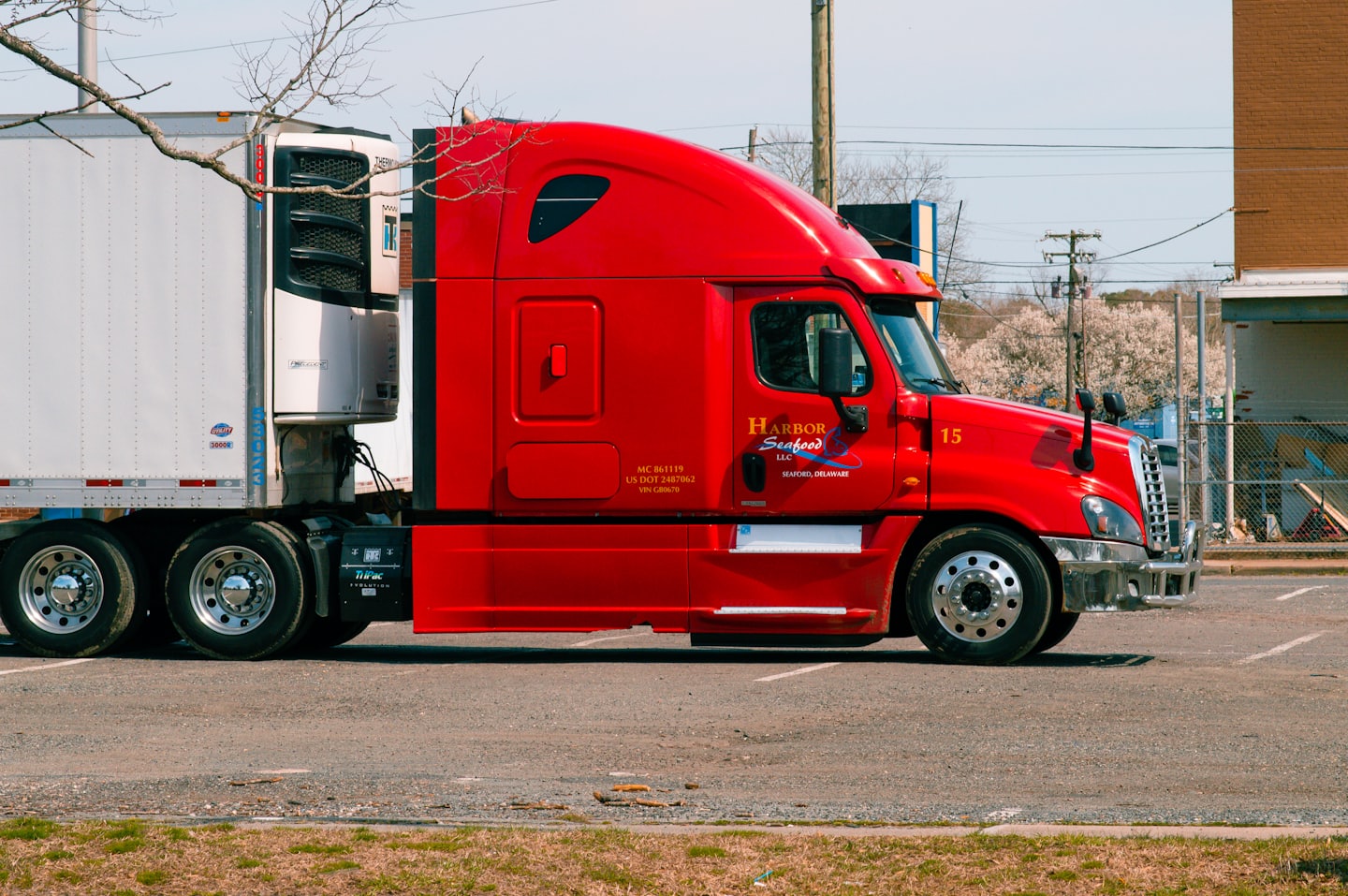

Know the Truck. Recognize the Change. Find the Problem.
The tractor is the part of the operation that earns the miles—and one of the fastest places for a small problem to become expensive downtime.
The Mile-Proven Tractor Center is built to help drivers and owner-operators understand the major systems of a highway tractor, recognize when something changes, work through symptoms, make better maintenance and repair decisions, and find reliable information when the truck is not behaving the way it should.
Page Sections:
WHAT IS YOUR TRACTOR DOING / FAULT CODES: START WITH WHAT THE TRUCK IS TELLING YOU
LEARN THE SYSTEM. KNOW YOUR NORMAL / TOOLS & EQUIPMENT / TRACTOR REFERENCE LIBRARY
WHAT IS YOUR TRACTOR DOING?
Start with the symptom.
A truck does not always hand you a clean diagnosis. Sometimes the first clue is that it is running hotter than normal, losing power, building air more slowly, making a new noise, or suddenly lighting up the dash.
Click below on your trucks symptom:





Takes too long to build pressure, stops building before normal pressure, won’t reach cutout.

Pressure falls too quickly, loses air parked, drops during braking, constant air leak.

Check-engine or stop-engine light, multiple warnings, reduced power, limp mode or derate.
New vibration, shake at certain speeds, rumble under load, clunk on acceleration or deceleration.

One wheel running hotter, burning smell, dragging brake, hot hub, abnormal wheel-end heat.
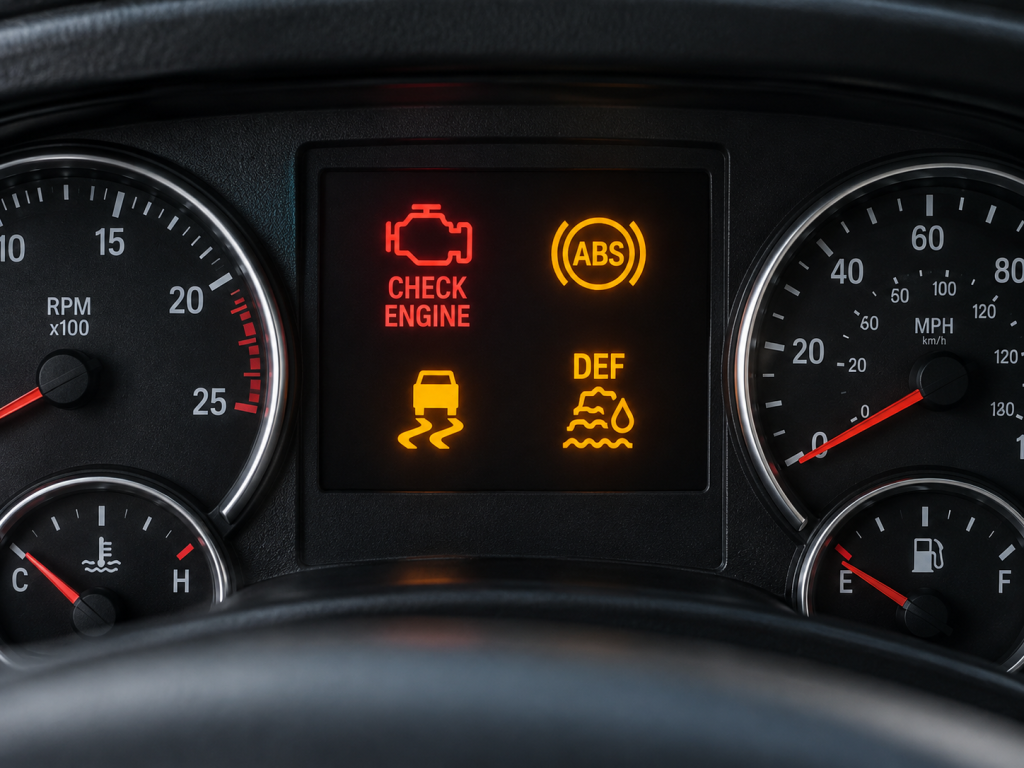
Frequent regens, regen won’t complete, DPF light, DEF warning, SCR fault or emissions derate.

Uneven wear, cupping, shoulder wear, repeated air loss, damaged tread, abnormal tire heat.

Oil, coolant, fuel or other fluid leaking, level dropping, wet components, unexplained fluid loss.
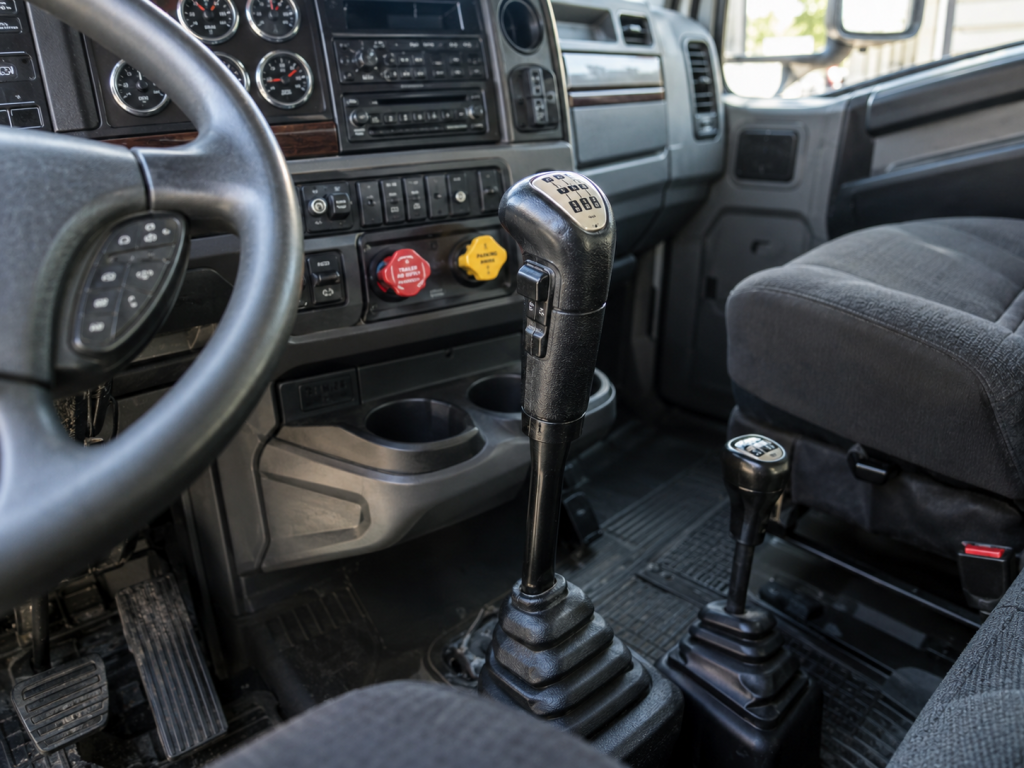
Hard shifts, missed shifts, grinding, stuck in gear, slipping or dropping into neutral.

Pulls to one side, wanders, needs constant correction, darts over bumps, feels loose
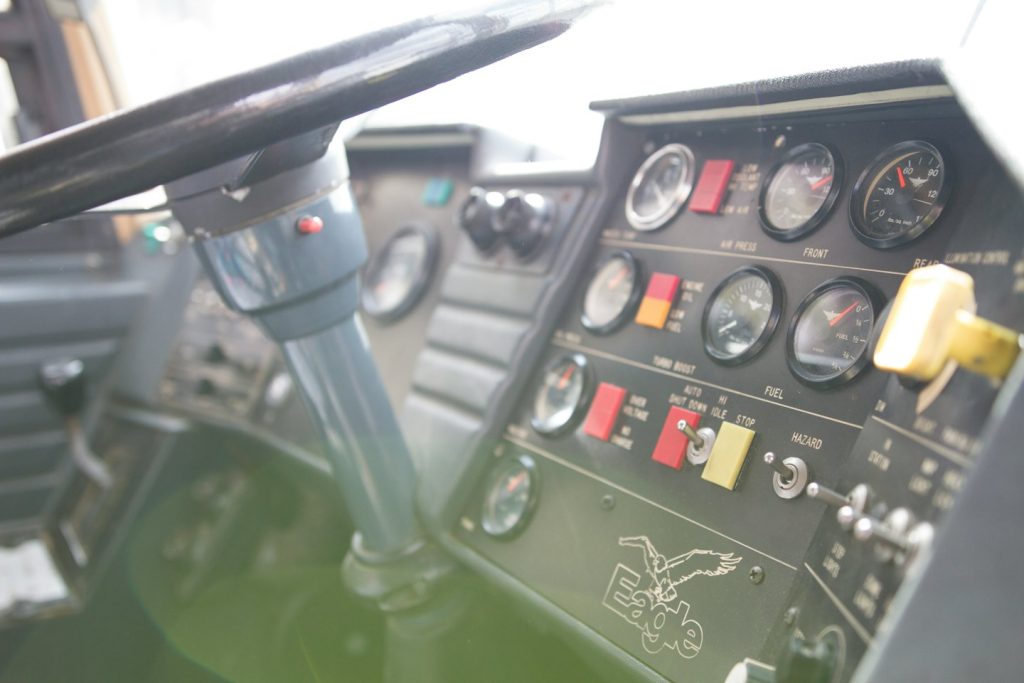
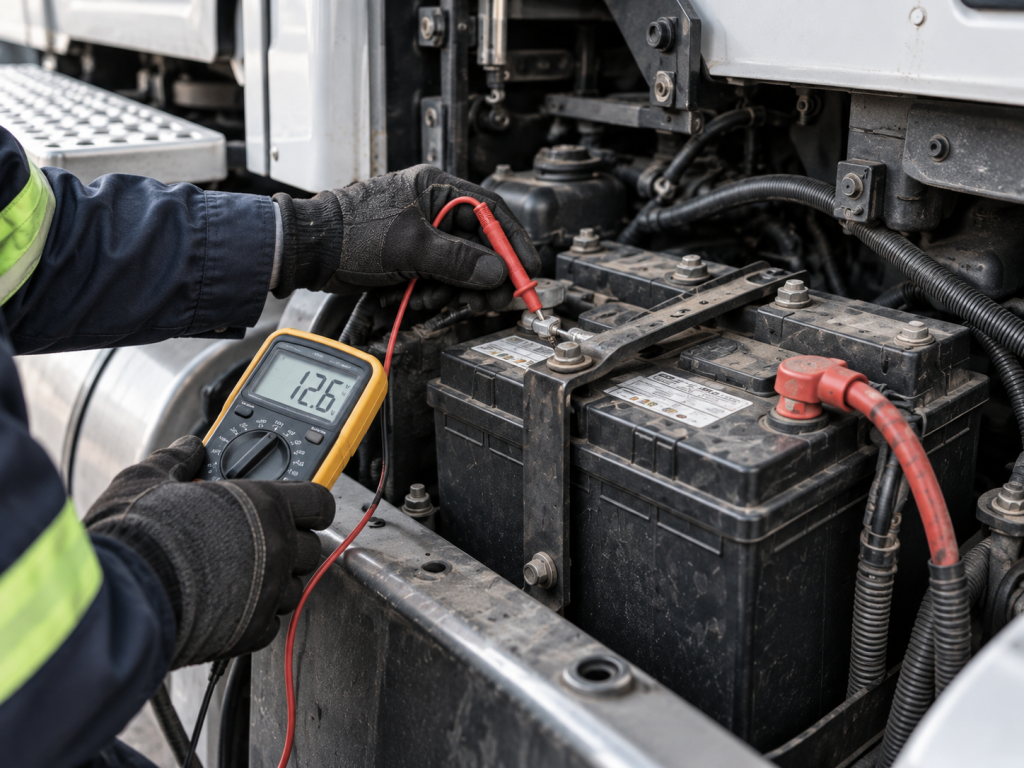
FAULT CODES: START WITH WHAT THE TRUCK IS TELLING YOU
A CODE IS A CLUE — NOT AUTOMATICALLY THE FAILED PART.
Many modern heavy trucks communicate diagnostic trouble codes through SAE J1939. You will commonly see a code written as an SPN paired with an FMI.
The SPN identifies the parameter or system reporting a problem. The FMI describes the type of failure being reported. Other information—such as whether the code is active, which controller reported it, how often it has occurred, and what the truck was doing at the time—can make the same code much more useful.
A fault referring to a sensor or circuit does not automatically mean that component should be replaced. Wiring, connectors, power supply, grounds, communication problems, operating conditions or another failure can sometimes produce the same code.
READ THE WHOLE CODE — NOT JUST THE SPN
SPN
WHAT IS REPORTING THE PROBLEM
The Suspect Parameter Number identifies the parameter, signal or system associated with the fault.
Think: Where is the problem being reported?
FMI
HOW THE PROBLEM IS BEING REPORTED
The Failure Mode Identifier describes the condition—such as too high, too low, erratic, open circuit, voltage problem or a system that is not responding correctly.
ACTIVE OR PREVIOUSLY ACTIVE
IS IT HAPPENING NOW?
An active code deserves different attention from a fault that occurred previously and is no longer active.
J1939 DM1 reports active diagnostic trouble codes, while DM2 can provide previously active codes when supported.
Think: Is this happening now, or is it part of the truck’s history?
SOURCE & OCCURRENCE
WHO REPORTED IT — AND HOW OFTEN?
The reporting controller can matter. Engine, transmission, ABS, aftertreatment and other modules may all communicate over the vehicle network.
Occurrence information can also show whether a fault appeared once or has repeatedly returned.
Think: Which module saw it, and is this a repeating problem?
| FMI | Starting Point |
|---|
| 0 | Value above normal range — most severe |
| 1 | Value below normal range — most severe |
| 2 | Erratic, intermittent or incorrect data |
| 3 | Voltage above normal / shorted high |
| 4 | Voltage below normal / shorted low |
| 5 | Current below normal / possible open circuit |
| 6 | Current above normal / possible grounded circuit |
| 7 | Mechanical system not responding or out of adjustment |
| 8 | Abnormal frequency, pulse width or period |
| 9 | Abnormal update rate / communication timing |
| 10 | Abnormal rate of change |
| 12 | Intelligent device or component problem |
| 13 | Out of calibration |
These are standard J1939 FMI categories; there are additional FMI values beyond this short list.
SPN 100 — Engine Oil Pressure
SPN 110 — Engine Coolant Temperature
SPN 111 — Engine Coolant Level
SPN 168 — Electrical / Battery Supply
SPN 190 — Engine Speed
SPN 639 — J1939 Network / Communication
The important part is not memorizing SPN numbers.
The same SPN paired with a different FMI can describe a very different problem. For example, SPN 190 identifies engine speed, but the FMI determines whether the issue being reported involves the value, communication, calibration or another failure mode. Eaton’s current Endurant documentation, for example, uses SPN 190 with different FMIs for separate engine-speed communication conditions.
BEFORE YOU CLEAR THE CODE
SAVE THE EVIDENCE FIRST.
Before clearing a fault, record the SPN, FMI, controller/source if available, active or inactive status, occurrence count, warning lamps, and what the truck was doing when the fault appeared.
Then write down what the tractor was doing:
Was it pulling a grade? Idling? Regenerating? Cold? Fully warmed up? Under heavy electrical load? Did the code appear with a loss of power, smoke, low voltage or another warning?
Those details can sometimes be more useful than the code by itself.
This is grounded in how J1939 diagnostics work: DM1 carries active DTCs, while DM2 can retain previously active faults, so code history can provide valuable context.
WHERE TO LOOK UP A FAULT CODE
DIESEL REPAIR
Broad heavy-truck fault-code lookup
Users can search commercial-truck fault-code database and view fault descriptions plus basic “quick repair” troubleshooting. It covers OEM and generic commercial-truck DTCs.
Search Diesel Repair Fault Codes →
CUMMINS QUICKSERVE
For Cummins-powered trucks
QuickServe provides engine-specific parts and service information using the engine serial number. Cummins also provides a Fault Code Analyzer through its QuickServe resources for electronic engines.
BENDIX DTC SEARCH
ABS, braking and Bendix systems
Search Bendix diagnostic trouble codes and use Bendix technical resources for ABS, braking, air-management and related systems.
Open Bendix Diagnostic Resources →
Use manufacturer-specific information when it is available. Some diagnostic information is standardized, while other faults and procedures are specific to the truck, engine, controller or component manufacturer. A generic code definition should be treated as a starting point—not the final repair procedure.
WHEN THE CODE ALONE ISN’T ENOUGH
A fault code can point you toward a system, circuit or condition without telling you what actually caused it.
When the symptoms, code history and truck behavior do not line up neatly, start putting the information together:
What changed?
When does it happen?
What other codes are present?
What has already been tested?
What repairs have already been tried?
The Exodus Trucking Community already gives members a place to bring those questions to Ask Richard / Ask Exodus and work through the problem with more context.
LEARN THE SYSTEM. KNOW YOUR NORMAL.
YOU DO NOT HAVE TO BE A DIESEL TECHNICIAN TO KNOW WHEN YOUR TRUCK IS CHANGING.
Knowing the major systems in your tractor gives you something more useful than memorizing a list of “normal” numbers.
It helps you understand what the truck is telling you.
Two identical-looking tractors can behave differently because of engine, transmission, axle, gearing, programming, load, climate and operating conditions. The numbers in somebody else’s truck are not automatically the numbers your truck should run.
Start with the manufacturer’s specifications. Then learn the behavior of your own tractor when it is healthy.
Know where the gauges normally run. Know how it sounds. Know how quickly the air builds. Know how it shifts, steers and brakes. Know how often it normally regenerates. Know what the tires normally look like as they wear. Know how much fluid it normally uses between services.
The baseline gives you something to compare the change against.
Build A Baseline For Your Tractor
When the truck is operating correctly, start recording things such as:
Warm engine oil pressure — at idle and at normal road RPM.
Coolant temperature — cruising, loaded and climbing grades.
Transmission and axle temperatures — if your tractor provides those gauges.
Charging voltage — engine off, idling and running with normal electrical loads.
Air-system behavior — how it normally builds pressure, when the governor cycles and whether pressure holds normally.
Regen behavior — how often it normally regenerates for your route and operation.
Fluid use — oil, coolant and other fluids between services.
Steering and handling — how much correction it normally needs and how the wheel feels.
Tire wear — where and how each tire normally wears.
Sounds and vibration — what is normal at idle, under load, during shifts and at highway speed.
Do not use this list to invent specifications. Always compare your observations with the correct OEM and component-manufacturer information for your exact truck.
That OEM point matters because even within one Freightliner manual, acceptable temperatures and minimum oil pressures differ by engine and axle manufacturer.
Understand what keeps the engine alive.
The lubrication system does more than keep moving parts slippery. Oil also carries heat, protects bearings, feeds components such as the turbocharger, suspends contaminants and gives you clues about what is happening inside the engine.
Learn what is normal on your tractor
Pay attention to:
- Oil pressure when the engine is cold.
- Oil pressure after the engine is fully warm.
- Warm-idle pressure versus pressure at road RPM.
- Normal oil consumption between services.
- Whether the engine normally uses any oil at all.
- Normal crankcase/blow-by behavior if you routinely monitor it.
- Where minor seepage normally exists versus a new wet area or drip.
gggg.
Changes worth investigating
A sudden pressure drop, an unexplained increase in oil consumption, new smoke, new external leakage, oil contamination, an unusual change in blow-by or an oil temperature change that does not match the operating conditions deserves attention.
A single reading does not always diagnose the problem. The trend and the conditions under which it changed matter.
Freightliner specifically cautions that sudden oil-pressure or oil-temperature changes can indicate mechanical trouble and notes that cold-engine pressure can differ significantly from warm pressure.
Future links: Engine & Lubrication Guide | Oil Pressure Troubleshooting | Oil Analysis | Member Diagnostics
Learn how the truck controls heat before “running hot” becomes the first clue you notice.
The cooling system includes more than the radiator. Coolant circulation, thermostat operation, fan control, radiator airflow, water pump condition, pressure control and—in many modern engines—EGR-related components all affect temperature.
Learn what is normal
Know:
- Normal coolant level when cold.
- Typical cruising temperature.
- What happens to temperature on a long grade.
- When the fan normally engages.
- How quickly the temperature returns toward normal after the load decreases.
- Whether the truck normally uses any coolant between services.
- How the heater behaves under normal conditions.
Changes worth investigating
Look closer when the truck:
- Runs hotter under the same load than it used to.
- Takes longer to recover after a grade.
- Starts using coolant.
- Pushes coolant from the reservoir.
- Develops pressure or coolant loss without an obvious external leak.
- Runs unusually cool.
- Has a fan that runs constantly or does not engage when expected.
Again, temperature under load is context-dependent. Freightliner notes that some temperatures can rise temporarily under heavy load and return to normal when load decreases; the change in behavior can be more important than seeing one elevated number.
Future links: Cooling-System Guide | Losing Coolant | Overheating Diagnostic Path | Member Troubleshooting
Power depends on getting the right amount of clean fuel and clean air into the engine at the right time.
Fuel filters, fuel supply, injectors, turbocharger, charge-air cooler, boots, piping, sensors and engine controls all play a role in how the engine performs under load.
Learn what is normal
Know how your tractor normally:
- Pulls a familiar grade.
- Responds when you roll into the throttle.
- Builds boost, if you have a boost gauge.
- Sounds under load.
- Smokes—or does not smoke—under acceleration.
- Starts after sitting overnight.
- Behaves before and after fuel-filter changes.
Changes worth investigating
Loss of power only under load, new smoke, hesitation, surging, longer cranking, unusual turbo sounds, increased fuel consumption or performance that changes after the engine warms up can all narrow the diagnostic direction.
This is why “weak under load” is useful information. It describes when the problem occurs, not merely that the truck “has no power.”
Future links: Losing Power | Fuel-System Basics | Turbo & Charge-Air System | Member Diagnostic Paths
Know where the air comes from, where it goes, and what happens when it does not behave normally.
The tractor’s air system includes the compressor, governor, air dryer, reservoirs, valves, lines and brake components. Understanding the basic path makes “slow air build” much easier to separate from “builds normally but will not hold pressure.”
Bendix’s own training treats compressor operation, valves, foundation brakes and failure-mode troubleshooting as interconnected parts of the total dual air-brake system.
Learn what is normal
Know:
- Roughly how your tractor normally behaves while building air from a low-pressure condition.
- When the compressor/governor normally unloads.
- What the air dryer normally sounds like when it purges.
- Whether the gauges normally rise together.
- How well pressure holds with the truck parked.
- How much pressure normally drops during ordinary brake application.
- How quickly the brakes release.
- What the brake pedal normally feels like.
Changes worth investigating
Pay attention when:
- Air suddenly takes longer to build.
- One reservoir behaves differently from the other.
- Pressure will not reach normal operating range.
- Pressure falls faster than it used to.
- The dryer purges unusually often.
- You hear a new air leak.
- A brake drags or releases slowly.
- The tractor pulls during braking.
Drivers on trucking forums commonly distinguish between knowing the textbook brake test and knowing how their own truck normally builds and holds air; that familiarity is useful, but it should supplement—not replace—proper inspection and manufacturer/regulatory procedures.
Future links: Slow / No Air Build | Air Pressure Drops | Brake-System Basics | Bendix Resources | Member Diagnostics
Modern tractors depend on stable electrical power for far more than starting the engine.
Batteries, alternator, cables, grounds, modules, data networks, inverter, APU and sleeper loads can interact in ways that make an electrical problem look like several unrelated problems.
Learn what is normal
Know:
- Resting battery voltage when the truck has been shut down.
- Charging voltage after startup.
- Charging behavior at idle versus road RPM.
- What happens when headlights, HVAC and other normal loads are added.
- Normal inverter behavior with the appliances you actually use.
- How your APU or auto-start system maintains the batteries.
- Whether your truck commonly changes voltage immediately after startup.
Changes worth investigating
Watch for:
- Slower cranking.
- Batteries repeatedly going dead.
- Voltage that suddenly runs higher or lower than usual.
- Multiple unrelated warning lights appearing together.
- Dash gauges behaving erratically.
- Inverter low-voltage alarms.
- APU running but not maintaining the battery bank.
- Electrical problems that appear only with heavy cab loads.
That last point matters because truck electrical problems can affect multiple modules and gauges at once rather than producing one neat symptom.
Future links: Charging-System Basics | Parasitic Draw | Inverter & APU Power | J1939/Data-Link Basics | Member Diagnostics
Learn what the emissions system is trying to accomplish before every regen becomes “a DPF problem.”
Modern aftertreatment can involve the DOC, DPF, DEF dosing system, SCR catalyst, temperature sensors, pressure sensors, NOx sensors and engine controls.
Learn what is normal
Pay attention to:
- How often your truck normally performs passive or active regeneration.
- How your duty cycle affects soot loading.
- Whether parked regens are normally rare or fairly common in your operation.
- Normal DEF consumption.
- Which warning lamps appear during ordinary regen operation.
- How long a normal parked regen takes on your tractor.
Changes worth investigating
Look deeper when:
- Regens suddenly become much more frequent.
- A regen will not complete.
- Soot level rises unusually quickly.
- DEF consumption changes significantly.
- A fault repeatedly returns after a regen.
- The truck begins derating.
- The same component keeps being replaced without correcting the condition.
One forum example involved repeated parked regens returning after DPF cleaning and sensor replacement—exactly why understanding the system and the operating pattern is more useful than assuming “DPF light = bad DPF.”
Future links: Regen / DPF / DEF Problems | Aftertreatment Basics | Fault Codes | Member Diagnostic Library
Learn how power gets from the engine to the road—and how the truck normally feels while doing it.
This system includes the clutch or automated clutch, transmission, driveshafts, U-joints, carrier bearings, differentials and axle components.
Learn what is normal
Know:
- How the clutch normally engages.
- How the transmission normally shifts cold and warm.
- What an automated transmission normally does during slow maneuvering and hill starts.
- Normal driveline lash.
- Normal vibration level at highway speed.
- Transmission and axle temperatures if your tractor provides them.
- What sounds normally occur during shifts, acceleration and deceleration.
Changes worth investigating
Watch for:
- A new clunk when getting on or off the throttle.
- Shifting that suddenly becomes slower or harsher.
- Grinding.
- Difficulty selecting gear.
- Dropping into neutral.
- A vibration tied to road speed.
- Transmission or axle temperatures changing under the same operating conditions.
- New howl, whine or rumble.
Owner-operators specifically discuss transmission and axle-temperature gauges as tools for recognizing changes before serious driveline damage occurs.
Future links: Shifting / Won’t Go Into Gear | Driveline Vibration | Transmission Basics | Member Troubleshooting
The way a tractor drives and the way its tires wear can tell you a lot about the chassis underneath it.
Steering linkage, steering gear, kingpins, suspension components, airbags, shocks, axle alignment, wheel bearings, hubs, brakes, wheels and tires all influence how the tractor tracks and what the tires look like over time.
Learn what is normal
Know:
- How much steering correction the tractor normally needs.
- Whether it naturally follows road crown.
- Steering-wheel position when traveling straight.
- How the tractor reacts to bumps and grooves.
- Normal ride height and suspension behavior.
- Normal tire pressures for the actual load and tire specification.
- Normal wear pattern across steer and drive tires.
- Whether wheel ends tend to run similar temperatures after comparable operation.
Changes worth investigating
Look closely when:
- The truck begins wandering or pulling.
- The steering feels looser than before.
- It darts after bumps.
- A tire begins feathering, cupping or wearing one shoulder.
- One tire repeatedly loses air.
- One wheel end runs hotter than the others.
- A vibration begins after tire or suspension work.
Bridgestone specifically notes that irregular tire wear can be a clue to alignment or other mechanical conditions and that handling complaints are reasons to investigate alignment; it also emphasizes matching inflation to the actual load rather than using one universal pressure for every operation.
Future links: Tire Wear / Air Loss | Pulling / Wandering | Hot Wheel / Hub / Brake | Member Diagnostics
THE GOAL IS NOT TO MEMORIZE EVERY SPECIFICATION. It is to know enough about the tractor that you can tell the difference between: what has always been normal, what changed, what system may be involved, and what information you need next.
That knowledge helps you describe a problem more clearly to a shop, recognize when a diagnosis does not fit the symptoms, avoid replacing parts based only on a fault-code description, and catch some developing problems earlier.
Owner-operators repeatedly say they want this level of knowledge—not necessarily the ability to rebuild every component, but enough understanding to recognize when something is changing, communicate intelligently with a mechanic, and make better decisions before a problem becomes expensive downtime.
TOOLS & EQUIPMENT
TOOLS THAT EARN THEIR KEEP.
The best tools are the ones that help you measure instead of guess, confirm what changed, handle smaller problems safely, and give you better information when the repair goes beyond what you should do on the road.
Build the kit around your tractor, your operation, and the work you are prepared to perform. Start with tools that help you measure a problem, verify what changed, make practical repairs, and reduce unnecessary downtime.
A useful owner-operator road kit should handle common loose hardware, minor repairs, stuck components and basic trailer issues without requiring a full shop setup.
Core tools: SAE and metric combination wrenches; SAE and metric socket sets; 3/8″ and 1/2″ ratchets; 1/2″ breaker bar; adjustable wrenches; locking pliers; tongue-and-groove pliers; needle-nose and lineman’s pliers; side cutters; multi-bit screwdrivers; Torx and tamper-resistant Torx bits; pry bar; 2–3 lb hammer or small sledge; utility knife; cordless drill/driver; and a good flashlight plus headlamp.
Owner-operators repeatedly mention both SAE and metric tools, breaker bars, Torx bits, locking pliers, drills, electrical tools, hammers and pry bars because commercial tractors and trailers can require all of them.
Useful supplies to keep with the tools include quality zip ties, electrical tape, strong repair tape, penetrating oil, hose clamps, spare fasteners and work gloves.
These are some of the highest-value tools on the truck because they turn “something seems wrong” into numbers you can compare against your tractor’s normal behavior.
Digital multimeter — DC voltage, resistance and continuity for batteries, charging systems, fuses, grounds and basic circuit checks.
DC clamp meter — useful when you want to measure current draw without disconnecting the circuit; particularly helpful for charging problems, inverter loads and suspected parasitic draws.
Battery tester — a conductance/load-style tester adds information beyond simply reading battery voltage.
Infrared thermometer — useful for comparing wheel ends, hubs, brakes, tires, cooling-system areas and other components. Truckers commonly use IR thermometers to compare one hub or brake against the others when something appears to be running hotter.
Electrical repair kit — wire stripper/crimper, heat-shrink connectors, assorted wire, spare fuses and relays, terminal-cleaning supplies and basic test leads. Electrical repair supplies and multimeters show up repeatedly in owner-operator road kits.
Commercial tires need to be measured, not judged by appearance.
Commercial tire-pressure gauge — choose one with enough range for heavy-truck pressures and a straight/dual-foot head that can reach inner duals.
Gladhand inflator hose with dual-foot air chuck — lets the tractor’s air supply be used for tire inflation when properly set up.
Tread-depth gauge — useful for watching wear long before the tire reaches minimum tread.
Infrared thermometer — compare hubs, brakes and tires after similar operating conditions. One wheel position that is significantly different from its companions can be useful diagnostic evidence.
Valve-core tool, spare valve cores and quality valve caps — small items that can solve surprisingly annoying pressure-loss problems.
Wheel chocks — useful whenever work or inspection requires the tractor to remain securely positioned.
Bridgestone recommends measuring tire pressure with a gauge and routinely checking tread and irregular wear; commercial tire pressure should be matched to the actual load/application rather than guessed. Truckers also repeatedly mention a professional dual-head gauge and gladhand inflator hose as road-kit staples.
This section is worth making better than the usual “buy a scanner” advice because there are now several practical levels of heavy-truck diagnostics.
Compact heavy-duty handheld reader — look for SAE J1939, J1708/J1587 compatibility and the ability to display SPN/FMI codes, access multiple truck modules and view live data. A current example of this class is the NEXAS NL102 Plus, which supports those heavy-duty protocols and lists engine, transmission, braking, suspension and other modules; it also offers selected DPF/service functions on supported engines.
Tablet/phone-based heavy-duty diagnostics — another useful format for an owner-operator. OTR Diagnostics currently supports major Cummins, Detroit, PACCAR, Volvo, Mack and International A26 applications, with functions that can include fault access, resets and forced regeneration depending on engine/platform.
More capable heavy-duty tablet scanners — current ANCEL HD-series tools support J1939/J1708 and are actively receiving updates for Freightliner, Kenworth, Peterbilt, International, Volvo and other commercial platforms.
Laptop communication interface — for OEM-level or more advanced software, devices such as the NEXIQ USB-Link 3 connect the truck to compatible PC diagnostic software and support commercial protocols including J1939 and J1708. NEXIQ lists approvals from Daimler Truck, PACCAR, International, Cummins, Eaton, Allison and others.
For the public page, I would stop there. Later, the member Tools & Diagnostics Library can compare actual scanners by truck/engine coverage, subscription cost, regen capability, live-data access, bidirectional functions and whether the tool is genuinely useful for an owner-operator.
Air-system problems become much easier to understand when you can determine whether the tractor is building pressure correctly, holding pressure, or losing it somewhere.
Accurate air-pressure test gauge — useful when confirming system pressure independently of the dash gauges. Bendix troubleshooting procedures specifically use an accurate external/shop-standard pressure gauge during air-system testing.
Approved leak-detection solution — helps locate fittings, valves, hoses and connections that are leaking air.
Gladhand inflator/test hose — useful for tire inflation and certain air-system checks when used correctly.
Spare gladhand seals — inexpensive, small and commonly carried because damaged seals can cause obvious tractor-trailer air leaks.
Approved air-line repair fittings and appropriate line — useful for repairs that are permitted for the specific line and application; brake and safety-critical repairs should follow the component manufacturer’s procedures.
Basic brake inspection tools — flashlight/headlamp, measuring tools appropriate to the brake type, and an IR thermometer for comparing abnormal brake or wheel-end heat.
This is one area where the tool and the technical reference should stay together. Bendix publishes troubleshooting and training material for compressors, dryers, valves, foundation brakes and electronic brake systems, which will fit naturally with your Tractor Reference Directory.
This deserves its own dropdown because the tools used to maintain the truck are different from the tools used to diagnose it.
Grease gun with flexible hose and appropriate coupler — for chassis and component lubrication where specified.
Filter wrenches — useful for servicing fuel, oil and other spin-on filters.
Fluid-transfer pump and clean funnels — for gear oil and other fluids where the fill point is difficult to reach.
Drain pan / catch container and absorbent material — useful for controlled maintenance and small leaks.
Torque wrench appropriate to the work performed — important whenever a component has a specified tightening value rather than “good and tight.”
Coolant tester/refractometer or the correct test method for the coolant system you run — coolant condition involves more than whether the reservoir looks full.
Oil/fluid sampling kit — useful if you are using laboratory oil, coolant, transmission or differential analysis as part of a maintenance program.
Owner-operators also commonly carry tractor-specific spares and consumables: the correct engine oil and coolant, spare filters, belts, hose clamps, hub oil where applicable, electrical connectors, fuses and relays. Real-world owner-operator lists repeatedly include grease guns, filter wrenches, fluids, belts, filters and electrical supplies.
This is also a perfect future Mile-Proven truck-specific checklist: once someone identifies their engine, transmission and axles, the member resource can tell them what fluids, filters, belts and service items actually fit that tractor.
FMCSA’s current rules require applicable truck tractors to carry fire-extinguishing equipment and warning devices for stopped vehicles, and spare fuses are required where fuses are needed for required parts/accessories. The regulation also specifies extinguisher ratings and mounting requirements.
A practical roadside equipment area should therefore include:
Properly rated and securely mounted fire extinguisher
Three compliant reflective warning triangles
Required spare fuses where applicable
High-visibility vest or outerwear
Wheel chocks
Bright flashlight and headlamp
Work gloves and disposable gloves
Basic first-aid kit
For roadside work, visibility and controlling the work area matter just as much as having the wrench you need.
BUILD THE KIT AROUND YOUR TRACTOR.
The right toolbox depends on what you drive, what you haul, what work you perform yourself and which problems you are trying to prevent from becoming downtime.
Carry tools because they solve a real problem, help you measure something useful, or reduce downtime—not because someone else’s toolbox looked impressive.
TRACTOR REFERENCE LIBRARY
A highway tractor is not one manufacturer’s machine from bumper to bumper.
The chassis may be Freightliner, Kenworth or Peterbilt. The engine may be Cummins, Detroit or PACCAR. The transmission may be Eaton or Allison. The brake system may use Bendix components. Each manufacturer may hold a different piece of the information you need.
The public Mile-Proven Tractor Reference Library gives you reliable places to start—along with Exodus guides and resources that help put the information into context.
VERIFY THE APPLICATION. Always confirm that a manual, specification or procedure applies to your exact model year, VIN, engine, transmission and installed component before relying on it.
EXODUS GUIDES & RESOURCES
Before You Buy a Used Tractor
What to investigate before the truck becomes yours—history, inspection, electronic information, testing and purchase risk.
Mile-Proven New-to-You Truck Guide
Already bought the truck? Start establishing the maintenance, condition and operating baseline.
NEW-TO-YOU TRUCK WORKBOOK
The fillable Mile-Proven workbook for documenting the truck, components, initial condition, maintenance and records.
OPERATING & MAINTAINING THE TRUCK
Know Your Tractor
Understand the major systems, what normal looks like and what changes are worth investigating.
What Can Wait — and What Can’t
A practical way to sort immediate problems from repairs and maintenance that can be planned.
Mile-Proven Truck Binder
Keep the truck’s identification, repair history, maintenance, inspection and operating records organized in one place.
BUSINESS & PROFITABLE MILES
Profitable Miles — The Owner-Operator Business Manual
The business side of running the truck: costs, decisions, planning and keeping the miles profitable.
Freightliner provides model-specific driver and maintenance manuals with technical and operational information. DTNA also maintains resources for Freightliner, Western Star and Detroit products.
Useful for: operator information, maintenance schedules, model-specific systems, driver information and basic technical specifications.
Freightliner Driver & Maintenance Manuals
A very useful future member-library note here: registered DTNA vehicle owners can potentially access resources such as VIN-based parts information, EZWiring, TechLit and VehicleInfo depending on eligibility/access. I would not explain all of that publicly right now—that sort of “here is exactly how to get what you need” information is member-library material.
Kenworth publishes operator manuals and has a Parts & Service resource area containing guides, technical information and downloads. Current manuals cover both newer tractors and older platforms such as the W900 and T800.
Useful for: operator information, maintenance, PACCAR-related references and model resources.
Peterbilt’s Driver Resources area includes operator manuals, body-builder manuals, tutorials and related truck information.
Useful for: operating information, maintenance basics, controls and vehicle-specific references.
Volvo’s resource area links to its eMedia system, where driver manuals can be searched by build year, model and engine. Volvo also offers more advanced emissions and diagnostic information separately.
Useful for: driver manuals, model information, emissions information and Volvo-specific technical resources.
International’s official Resources area includes product manuals, specifications, body-builder information and other vehicle resources.
Useful for: International model manuals and truck-specific specifications.
Mack now has a VIN-based Digital Driver Guide for supported newer models, while Western Star information is available through the wider DTNA resource system.
We link to the source whenever possible. Manufacturer manuals and technical information change over time. Always verify that a manual, specification or procedure applies to your exact truck, engine, component and model year.
THE PUBLIC DIRECTORY POINTS YOU TO THE SOURCE.
THE MEMBER LIBRARY DOES THE DIGGING.
Finding a manufacturer’s website is the easy part.
Finding the right manual, wiring information, specification, fault reference or component document for the exact tractor in front of you can take much longer.
The Exodus Member Reference Library is being built to organize that information by:
Truck make & model · Engine · Transmission · Electrical · Air & brakes · Aftertreatment · Steering & suspension · Wheel ends · Tires · Fault codes · Specifications · Technical literature
Instead of another list of links, member resources will be organized around what the source contains, when it is useful, what equipment it applies to, and what Exodus resources connect to it.
MEMBER REFERENCE LIBRARY — IN DEVELOPMENT
More manufacturer-specific references, direct manuals, diagnostic information and component resources will be added inside the Community as the library grows.
WHEN THE BASIC ANSWER ISN’T ENOUGH.
The public Tractor Center is built to help you understand the symptom, the system behind it, the code information and the first things worth checking.
When the problem does not fit neatly into a checklist, the Exodus Trucking Community gives you a place to work through the harder cases—detailed diagnostic resources, manufacturer and component information, member discussions, maintenance references, and Ask Richard / Ask Exodus when you need help putting the pieces together.
BRING THE SYMPTOM. BRING THE CODE. BRING WHAT YOU’VE ALREADY CHECKED.