
Avoiding DOT violations isn’t about luck at the scale house. It’s about knowing what inspectors look for, catching the problems that get trucks parked, and keeping your business moving.
You’ve got a loaded trailer, a delivery appointment to make, and just enough hours left to get there. Then you see the sign: TRUCKS ENTER SCALE.
For some drivers, it’s just another stop. For others, it’s the beginning of an expensive afternoon.
A roadside DOT inspection can go smoothly, or it can end with a truck parked, a missed delivery, a repair bill, and violations on your safety record. For an owner-operator, that isn’t just an inconvenience. That’s money coming directly out of the business.
The good news? A lot of inspection trouble starts with things that could have been caught before the truck ever left the yard.
Here are five practices worth paying attention to, whether you’re running one truck or managing a small fleet.
1. Check What Inspectors Are Actually Finding Wrong
Every driver knows to do a pre-trip. But are you checking the things that are most likely to get a truck placed out of service?
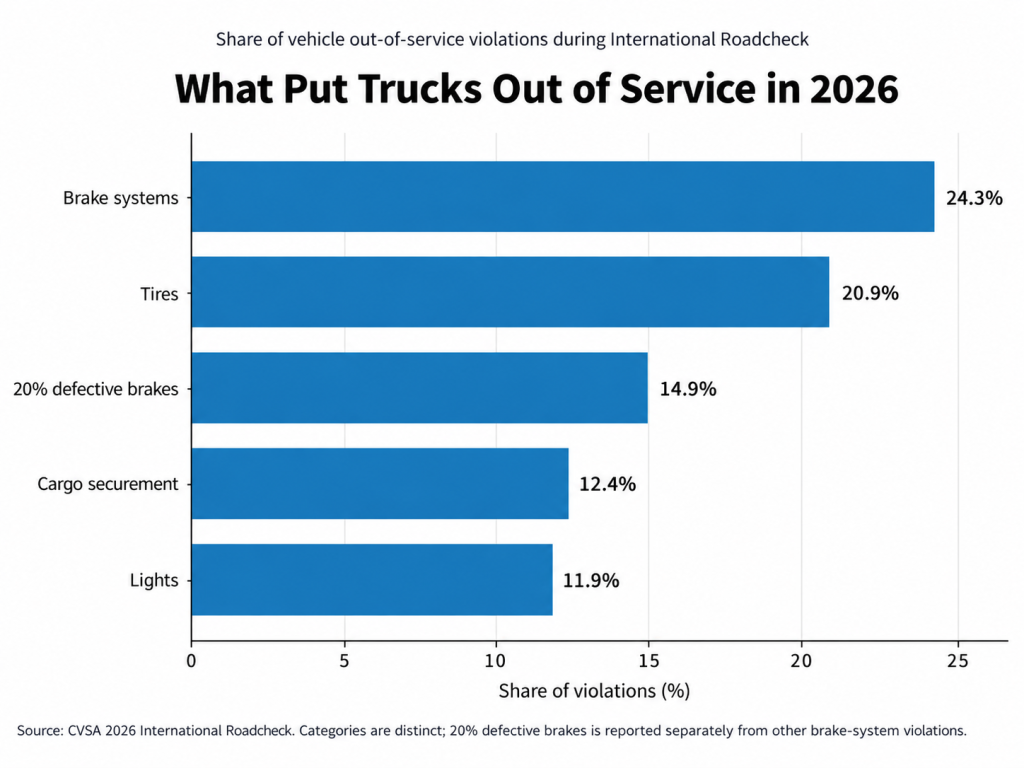
During the Commercial Vehicle Safety Alliance’s 2026 International Roadcheck, inspectors conducted more than 54,000 inspections across North America. Brake problems topped the list of vehicle out-of-service violations, followed by serious tire problems and other defects involving cargo securement and lighting.
That’s worth remembering the next time you’re tempted to give the truck a quick walk-around and call it good.
Pay attention to air leaks, brake components, tires, and lights on both the tractor and trailer. Check for damaged hoses, loose connections, worn tires, and lights that work only when the plug is positioned just right.
And don’t overlook the trailer. Plenty of operators maintain their tractors carefully while the trailer collects the little problems that eventually become big ones.
Here’s one habit worth developing: When you park for the night, take another look at the equipment after it’s been working all day. A developing air leak, fresh fluid underneath the truck, or a tire wearing unevenly may be more noticeable than it was that morning.
The goal isn’t simply to pass an inspection. It’s to catch a problem while you’re somewhere you can actually deal with it.
2. Don’t Let Paperwork Park a Perfectly Good Truck
There’s nothing quite like having a mechanically sound truck and getting caught by an expired document or an electronic log problem.
Your CDL, applicable medical qualification, vehicle registration, annual inspection documentation, and hours-of-service records all deserve attention. The requirements vary by operation, but the responsibility for keeping them current doesn’t disappear because you’re busy running loads.
For owner-operators running under their own authority, there’s usually nobody back at the office reminding you that a trailer inspection expires next week.
One of the smartest things you can do is keep an expiration calendar and check it regularly.
And if you’re running an electronic logging device (ELD), know how to use its roadside inspection function. An officer may ask you to display or electronically transfer your records. You don’t want to be figuring out those controls for the first time while sitting at the scale.
Know how to review your logs, handle legitimate corrections, and access the required ELD instructions.
A well-organized in-cab record system doesn’t guarantee you’ll pass, but it can eliminate unnecessary confusion and help you catch problems before they turn into violations.
Keep Your Truck Records Organized
A little organization can save a lot of frustration at the scale house. Our Mile-Proven In-Cab Trucking Binder helps owner-operators keep important truck information and operating records together, so they’re easier to find when needed. It’s a practical way to bring some order to the paperwork that comes with running a truck.
3. A Tight Load Isn’t Always a Properly Secured Load
Flatbed operators know that cargo securement can make or break a day. What sometimes gets overlooked is that a load can look secure and still fail to meet the requirements.
A chain may be strong enough, but the binder or attachment point may have a lower rating. A strap may be tight but damaged where it passes over a sharp edge. A piece of equipment might be restrained against forward movement while still lacking the securement required in another direction.
These are the kinds of details that matter during an inspection.
Working load limit, or WLL, is the rated capacity of securement equipment. Knowing the ratings of your chains, straps, binders, and attachment points matters because the strength of one component doesn’t automatically determine the capacity of the whole system.
And remember what happens after you leave the shipper. Loads settle. Straps can loosen. Equipment can shift.
Federal cargo-securement rules generally require drivers to inspect the load and securement within the first 50 miles, followed by additional checks at prescribed intervals, with exceptions for certain loads.
That first stop isn’t wasted time. It’s a chance to catch the problem before an inspector—or a sudden stop—does.
Go Beyond the Basics With Mile-Proven Cargo Securement
Proper cargo securement involves more than throwing a few chains or straps over a load. Different types of freight require different equipment, securement methods, and working load limit calculations.
We’re building the Mile-Proven Cargo Securement Center inside the Exodus Trucking Community to bring these resources together in one place. From transport chains, binders, straps, and other cargo-control equipment to securement regulations, practical guides, and load-specific reference materials, the center is being developed to help drivers and owner-operators find the information and tools they need.
Explore the Exodus Trucking Community
4. Know What Happens When the Inspector Finds Something
Not every DOT inspection is the same, and not every violation puts a truck out of service.
A Level I inspection is a comprehensive driver and vehicle examination. A Level II is generally a walk-around inspection, while a Level III focuses on the driver and required records.
Understanding the difference takes some of the uncertainty out of the process.
If you’re selected for an inspection, follow the officer’s instructions, have your required information available, and answer questions clearly. If an officer points out a violation you don’t understand, ask what was found and which requirement applies.
Here’s something owner-operators should especially remember: The inspection isn’t necessarily over when you leave the scale.
If violations are listed on the inspection report, federal rules generally require the motor carrier to review them, certify that they’ve been corrected, and return the required certification within 15 days. The carrier must also keep its copy of the report for the required retention period.
If you’re running under your own authority, you’re wearing both hats—the driver who received the inspection and the carrier responsible for following up.
Ignoring the paperwork after a roadside inspection can create a second compliance problem even after the truck has been repaired.
Stay Ahead of DOT Enforcement and Rule Changes
Roadside inspection priorities, enforcement campaigns, and federal trucking regulations don’t stand still. Visit the Exodus DOT Inspection Center for information about inspection requirements, common violations, FMCSA developments, and practical compliance resources for owner-operators and small carriers.
5. Fix the Little Problems Before They Become Roadside Repairs
Most owner-operators know their trucks well enough to recognize when something isn’t quite right.
A small air leak that wasn’t there last month. A trailer light that cuts out occasionally. A tire that keeps losing pressure. A warning light that comes and goes.
The trouble starts when you get used to those problems.
It’s easy to tell yourself you’ll deal with it after the next load, especially when the truck is still making money. But an inspection doesn’t happen on your maintenance schedule.
A simple repair at home can become a roadside service call, an out-of-service order, or a lost day’s revenue when it’s put off too long.
For a business owner, the answer is a maintenance system that catches recurring problems. Keep useful repair records, track repeated defects, and make sure reported safety problems are corrected rather than passed along to the next driver.
And don’t just look at your inspection reports as paperwork to file away. Look for patterns. Repeated lighting violations, brake defects, or recordkeeping problems can tell you where your operation needs attention.
A good maintenance routine costs money. So does downtime. The difference is that planned maintenance gives you some control over when and where you spend it.
The Best Inspection Strategy Starts Before the Scale House
There will always be conversations about strict inspection stations, enforcement blitzes, and ways drivers try to avoid being pulled in. But there’s no dependable shortcut around bad brakes, unsafe tires, loose freight, or missing qualifications.
The best advantage an owner-operator can have is knowing the truck is ready before anyone asks to inspect it.
Take the extra time to look over your equipment. Understand what belongs in your records. Know how your cargo is secured. And when something needs attention, take care of it before a delivery schedule makes the decision for you.
Because passing a DOT inspection is good for your business.
Keeping your truck safe, your safety record clean, and your business earning money is even better.
Keep the Wheels Turning With Exodus
Passing an inspection is only one part of running a successful trucking business. Keeping equipment reliable, staying current with regulations, managing records, and making profitable decisions all matter.
At Exodus Truck & Trailer, we’re building practical resources for the people who own, operate, maintain, and depend on commercial trucks. Explore our Mile-Proven Center for trucking knowledge and resources, or learn more about the Exodus Trucking Community, where we’re developing additional tools and member resources.
Mile-Proven Knowledge. Keep the Wheels Turning.
Leave a Reply